
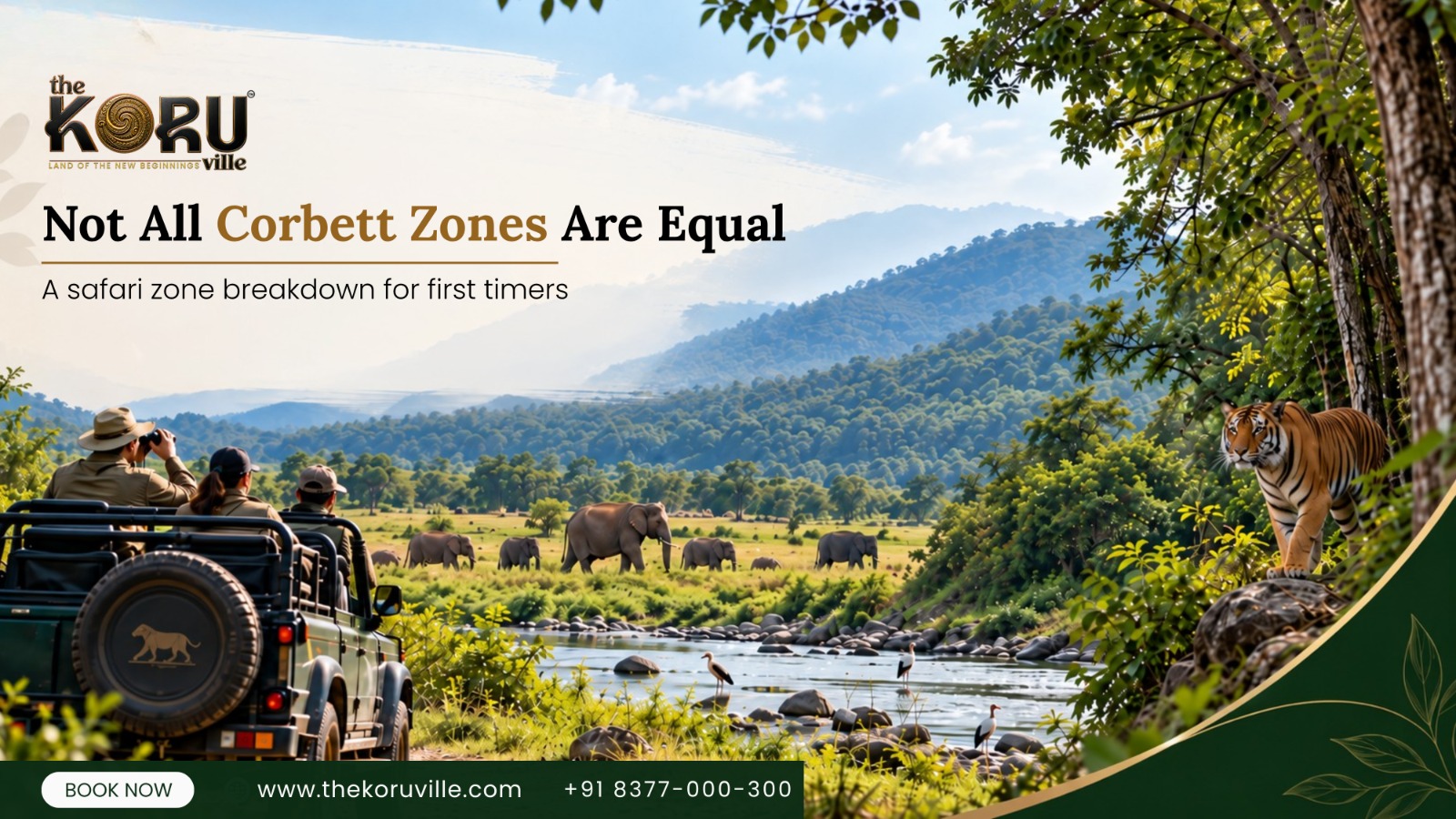
Imagine standing in an open forest clearing as morning light spills through tall grass. A herd of elephants moves slowly past you. Somewhere deeper in the trees, a tiger walks without a sound. That picture lives in the heart of every traveller who dreams of a Jim Corbett safari. Yet most people believe a safari means picking a date and showing up at a gate. The truth feels far more interesting. This park splits into many tourism zones, and each zone gives you a separate world.
Some zones stand out with tall grass and elephants, while others hide dense sal trees where tigers roam. A few stay open all year, while others close when rain arrives. Because of this, Jim Corbett safari zones deserve a closer look before you book anything. Picking the wrong zone can leave you disappointed. Picking the right one turns a simple trip into a story you tell for years. This blog guide walks you through every major zone, starting with Phato, so your first safari feels magical.
Why Corbett Is Divided Into Different Zones
Jim Corbett is not one big open playground. Forest officers divide Jim Corbett safari zones for good reasons. Wildlife needs protection, and visitors need management. Permits stay limited, so animals do not feel crowded. Each zone carries its own gate, its own rules, and its own season. Some zones open in winter, while others welcome guests during monsoon. This system keeps the forest healthy and the experience special. Understanding this system helps you plan a smarter Jim Corbett itinerary and avoid common mistakes.
Phato Zone – Corbett’s Fast-Rising Wildlife Destination
Phato Zone is located near the Kashipur–Ramnagar corridor. This zone has gained attention because it offers a calm, less crowded safari zone. Phato Gate serves as the entry point, and it is close to several resorts and townships; it opens 365 days a year for visitors, even in the monsoon. Many travellers now choose Phato because it blends easy access with real forest beauty.
What Makes Phato Special
- Phato Gate opens doors to rich buffer forest land.
- The terrain mixes open patches with thick trees.
- Deer, wild boar, and elephants often appear here.
- Birdlife flourishes, so photographers stay busy.
- Crowds stay smaller compared to famous zones.
- The drive from Ramnagar feels short and smooth.
Phato works well for families and first-timers. Children spot animals without waiting for hours. Couples enjoy quiet moments under tall trees. Because Phato Gate exists near growing residential areas, many visitors combine a safari with a longer stay. This zone also pairs nicely with a Jim Corbett weekend trip, since you can reach it fast and still enjoy deep forest vibes.
Pros of Phato Zone
- Fewer vehicles mean a peaceful ride.
- More chances to see elephants and deer.
- Easy access from nearby townships.
- Perfect for short trips and quick getaways.
Cons of Phato Zone
- Tiger sightings happen less often.
- The zone feels smaller than Dhikala.
- Permits can fill fast during peak season.
Dhikala Zone – Corbett’s Most Iconic Wilderness
Dhikala remains the largest and most famous zone. People call it the heart of Corbett. Wide grasslands stretch for miles, and the Ramganga reservoir shines in the sun. Elephant herds walk slowly across open fields. Birds circle above the water. This zone delivers the classic safari picture that lives in most travellers’ minds.
Key Features of Dhikala
- Entry happens through Dhangadi Gate.
- Canter safaris rule this zone.
- The zone stays open only in season.
- Grasslands and water bodies create rich biodiversity.
- Wildlife density stays high throughout the year.
Dhikala suits wildlife lovers and serious photographers to capture the best moments of elephants. First-timers who want the full Corbett feeling often pick this zone. However, permits vanish quickly, so booking early matters. The zone closes during monsoon, which limits travel plans. Still, for many people, Dhikala defines Jim Corbett tourism at its finest.
Pros of Dhikala Zone
- Huge grasslands boost animal sightings.
- Elephants appear often near the reservoir.
- The scenery feels grand and open.
Cons of Dhikala Zone
- Permits run out fast.
- The zone stays closed in monsoon.
- Canter safaris feel less private.
Bijrani Zone – Where Tigers Roam
Bijrani sits close to Ramnagar, which makes it a favourite for short stays. Dense sal forests cover much of this zone, and tigers love these shaded paths. Grasslands break the trees here and there, giving animals room to move. Visitors choose Bijrani because it mixes easy access with strong wildlife viewing.
Key Features of Bijrani
- Dense sal forests create perfect tiger cover.
- Grasslands offer open viewing spots.
- The zone sits near Ramnagar for quick access.
- Seasonal opening applies here too.
Photographers chase tiger tracks in Bijrani. Families enjoy the shorter travel time. The zone rewards patience, and lucky visitors catch a glimpse of the striped king. For anyone building a Jim Corbett itinerary, Bijrani deserves a top spot.
Pros of Bijrani Zone
- Strong tiger sighting chances.
- Close to Ramnagar hotels.
- Beautiful forest scenery.
Cons of Bijrani Zone
- Crowds gather during peak months.
- The zone closes in monsoon.
- Permits are limited.
Jhirna Zone – Open All Year
Jhirna stays open through all seasons, which makes it a flexible choice. Travellers with sudden plans love this zone. Elephants wander here, and bears sometimes appear near the edges. Deer graze in open patches. The zone remains one of the most visited because weather rarely stops safaris.
Key Features of Jhirna
- Open throughout the year.
- Elephants, bears, and deer appear often.
- Good for monsoon visitors.
- Permits are available more often.
Jhirna helps people who cannot plan months in advance. The zone offers steady wildlife viewing without strict season limits. However, tiger sightings happen less often than in Dhikala or Bijrani.
Pros of Jhirna Zone
- Year-round access.
- Great for flexible plans.
- Frequent elephant sightings.
Cons of Jhirna Zone
- Fewer tiger encounters.
- The landscape feels less dramatic.
- Birding stays moderate.
Dhela Zone – The Hidden Gem
Dhela started as an ecotourism zone, and it still feels fresh. Mixed forests cover the land, and birds fill the trees. Fewer vehicles mean quieter rides. Repeat visitors love Dhela because it offers calm and variety.
Key Features of Dhela
- Open all year.
- Mixed forest habitat.
- Rich birdlife and plant life.
- Smaller crowds.
Birdwatchers treasure this zone. Nature lovers enjoy the slow pace. Dhela also works well for photographers who want space and silence.
Pros of Dhela Zone
- Year-round access.
- Excellent birding.
- Peaceful atmosphere.
Cons of Dhela Zone
- Tiger sightings stay moderate.
- The zone feels smaller.
- Fewer canter options.
Durga Devi Zone – A Bird Lover’s Paradise
Durga Devi Zone exists in hilly land with rivers cutting through. Rare birds fly here, and photographers chase light across the water. The zone opens only in season, but the scenery rewards the wait.
Key Features of Durga Devi
- Hilly terrain and river ecosystems.
- Rare birds appear often.
- Landscape photography shines here.
- Seasonal opening applies.
Nature lovers pick this zone for its beauty. Birdwatchers bring long lenses. The zone feels calm and wild at the same time.
Pros of Durga Devi Zone
- Excellent birding.
- Stunning landscapes.
- Quiet atmosphere.
Cons of Durga Devi Zone
- Fewer tiger sightings.
- Closed in monsoon.
- Limited permits.
Garjiya, Sitabani, and Other Zones
Garjiya offers scenic views and fewer crowds. Sitabani gives a buffer forest experience with nature walks. These Jim Corbett safari zones help spread visitor pressure across the reserve. Each one adds something different to the Corbett story.
Which Zone Fits Your Plan?
- If you want to see tigers, then pick Dhikala or Bijrani.
- If you need year-round access, choose Phato, Jhirna, or Dhela.
- If you want to explore migratory birds, then head to Durga Devi or Dhela.
- If you want fewer crowds, try Garjia or Phato.
Why People Return to Corbett Often
Many travellers visit once for a safari and then fall in love with the region. Forests, rivers, clean air, and quiet surroundings turn a single Jim Corbett weekend trip into a habit. Weekend escapes become a routine. Remote work feels better near nature. Photography trips turn into family traditions. This region offers more than wildlife; it offers a slower, calmer life.
A Second Home Near Jim Corbett, Uttarakhand
Interest in second homes grows every year because of noise and air pollution in metro cities. Buyers look for nature-focused living, work-from-anywhere setups, and weekend retreats. Areas near Corbett and the Kashipur–Ramnagar corridor attract people who want plots and holiday homes in Uttarakhand. The Koru Ville understands this shift and builds spaces that match it.
The Koru Ville – A Gateway to the Corbett Lifestyle
The Koru Ville township is located in Kilawali near the Kashipur–Ramnagar corridor. The township is just a 15-minute drive from Phato Gate, one of the popular safari access points linked to Jim Corbett tourism. This location lets residents reach the forest quickly.
The Koru Ville offers:
- A gated township for safety and calm.
- Common and private pools in the luxury villas.
- Residential plots for planned villas.
- Resort-style amenities for daily comfort.
- Nature-inspired themes like Simha, Mayoora, and Mrigha.
- Weekend home options for city dwellers.
- A nature-focused lifestyle surrounded by green views.
- Generate rental income when residences are not used.
- A scenic view of Tumaria Dam, which is the next emerging water-spot tourist destination.
For travellers who return to Corbett many times a year, owning a place nearby can replace repeated hotel bookings. The Koru Ville makes that dream feel simple. The Koru Ville also connects residents to the forest without losing modern comforts. The Koru Ville keeps nature at the centre of its design. The Koru Ville gives families a base for safari and Jim Corbett weekend trips and quiet weekends. The Koru Ville blends forest living with everyday ease. The Koru Ville stands as a smart choice for nature lovers.
Final Thoughts
Overall, we can’t judge any zone in Jim Corbett, because each zone serves a different purpose. Dhikala gives grand views, while Bijrani hides tigers in sal forests. The main attractions in Jhirna include safari facilities round the year, along with elephant, bear, and deer sighting opportunities, while Dhela is famous for birdlife, mixed forest, and serene safaris. The best thing about Phato is that you get serenity along with easy accessibility to the area and all facilities round the year. For beginners, the choice of zone will depend on what one likes, not on the hype of the place. This is important for making the most of your stay.
FAQs
1. Which Corbett safari zone is closest to The Koru Ville?
Phato Gate is the closest safari access point to The Koru Ville, located just a 15-minute drive away. This makes it the most convenient zone for residents. While Dhikala and Bijrani offer classic safari views, Phato provides a calm, less crowded experience perfect for quick morning or evening safaris.
2. Can I book a Phato Gate safari all year round?
Yes! Unlike Dhikala and Bijrani, which close during the monsoon, Phato Gate stays open 365 days a year. This means residents at The Koru Ville can enjoy a safari any time they visit—whether it's a summer weekend, a monsoon getaway, or a winter holiday.
3. Is Phato Gate good for tiger sightings?
Phato offers moderate tiger sighting chances. However, it shines for elephant, deer, and bird sightings. The zone is ideal for families and first-timers who want a peaceful, uncrowded safari experience. For serious tiger tracking, residents can also plan a day trip to Dhikala or Bijrani from The Koru Ville.
4. Can I visit Phato Gate for a safari if I stay at The Koru Ville?
Absolutely. The Koru Ville is located in Kilawali, just a short drive from Phato Gate. Residents can book a safari permit and reach the gate within 15 minutes—no long transfers, no early morning stress. It is the ultimate convenience for wildlife lovers.
5. Is The Koru Ville a good investment for rental income?
Yes. The Jim Corbett region has a shortage of premium villa-style accommodations. With Phato Gate open year-round and Tumaria Dam emerging as a tourist spot, demand for luxury stays is rising. The Koru Ville owners can rent out their villas when not in use, generating strong ROI while enjoying capital appreciation.
6. Which Jim Corbett safari zone is best for elephant sightings?
If you want to see elephants, Dhikala and Phato are your best bets. Dhikala’s open grasslands near the Ramganga reservoir attract large herds, while Phato offers frequent sightings in its buffer forest area. Jhirna is also a strong contender, especially for those visiting during the monsoon when other zones are closed.
7. What is the difference between Phato Gate and Dhangadi Gate?
Phato Gate is located near the Kashipur–Ramnagar corridor and is ideal for those staying in nearby townships or The Koru Ville. It is open 365 days a year. Dhangadi Gate is the entry point for the famous Dhikala Zone, which is only open seasonally and requires booking canter safaris well in advance.
8. Can I book a Jim Corbett safari online, or do I need an agent?
Yes, you can book permits online through the official Uttarakhand Forest Department website. However, because permits for popular zones like Dhikala and Bijrani sell out within minutes, many travelers prefer to book through their resort or a local agent who understands the exact release timings.
9. Which zone is best for birdwatching in Jim Corbett?
Durga Devi and Dhela are paradise for birdwatchers. Durga Devi offers hilly terrain and river ecosystems where you can spot rare migratory birds. Dhela, being an ecotourism zone with mixed forests, offers a quieter experience with rich birdlife.
10. Is it worth visiting Corbett during the monsoon?
Yes, but only if you choose the right zone. While Dhikala and Bijrani remain closed during the rainy season, zones like Jhirna, Dhela, and Phato stay open. The forest is lush and green, and you often have the park almost to yourself.
11. Why is Kashipur–Ramnagar corridor becoming a hotspot for second homes?
The Kashipur–Ramnagar corridor offers the perfect balance: it is close enough to Delhi NCR for a weekend drive, yet far enough to escape the pollution. With the rise of work-from-anywhere, buyers are looking for nature-focused living near Jim Corbett tourism without sacrificing modern amenities.
12. Can I earn rental income from a villa near Jim Corbett?
Absolutely. The region has a massive shortage of premium, resort-style accommodations. A luxury villa at The Koru Ville, located just 15 minutes from Phato Gate, can be rented out to tourists when you are not using it, providing a strong ROI and helping cover maintenance costs.
13. What is The Koru Ville, and how is it different from a regular resort?
The Koru Ville is not just a resort; it is a gated township offering residential plots and luxury villas for ownership. Unlike a hotel, you own the asset. It features nature-inspired themes like Simha, Mayoora, and Mrigha, private pools, and a scenic view of Tumaria Dam, making it a true second home.
14. Is it safe to invest in plots near Jim Corbett?
Yes, investing in Uttarakhand real estate near Corbett is considered safe and high-potential due to strict forest regulations that limit new construction, keeping supply low while demand for weekend homes continues to rise. Always ensure the project is RERA-approved and has clear land titles, like The Koru Ville.